
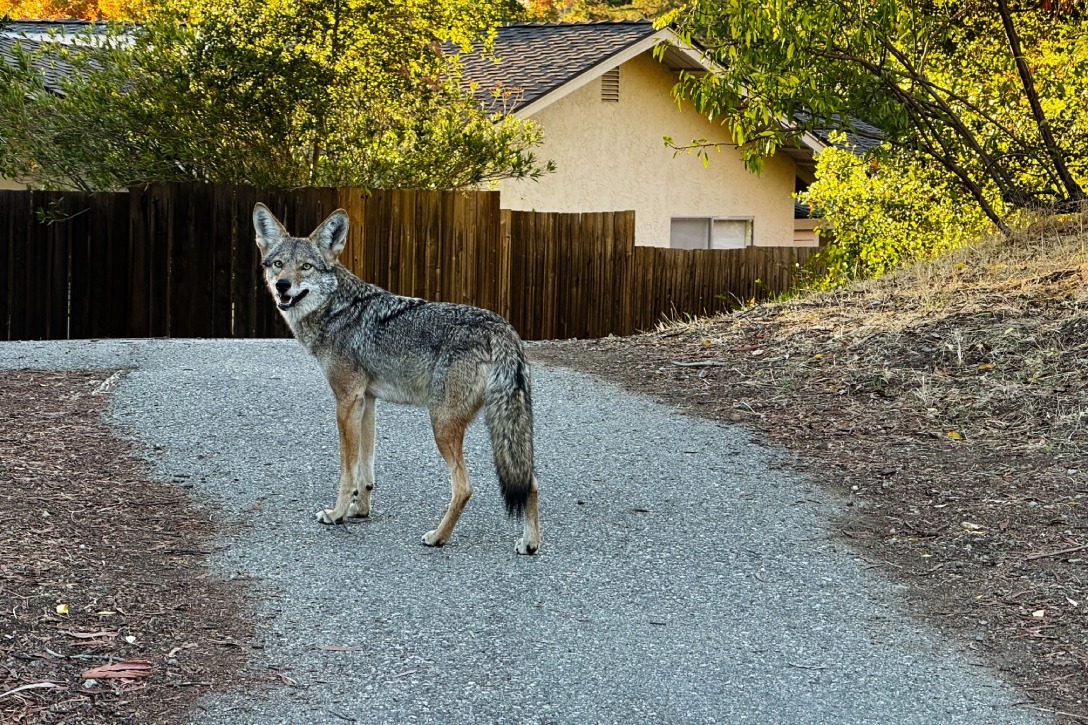
Coyotes now live in all 100 counties in North Carolina. Foxes, raccoons, and stray dogs are part of the picture too. If you have a dog, a cat that goes outside, backyard chickens, or a few head of small livestock, a fence is your first and most reliable line of defense.
Protecting Pets & Livestock from Predators
Unfortunately, a standard yard fence may not be built to stop a predator. Keeping animals safe comes down to three things a predator will test: whether it can go over, under, or through. Here’s how to build a fence that stops them on all three.
How Tall Does a Predator Fence Need to Be?
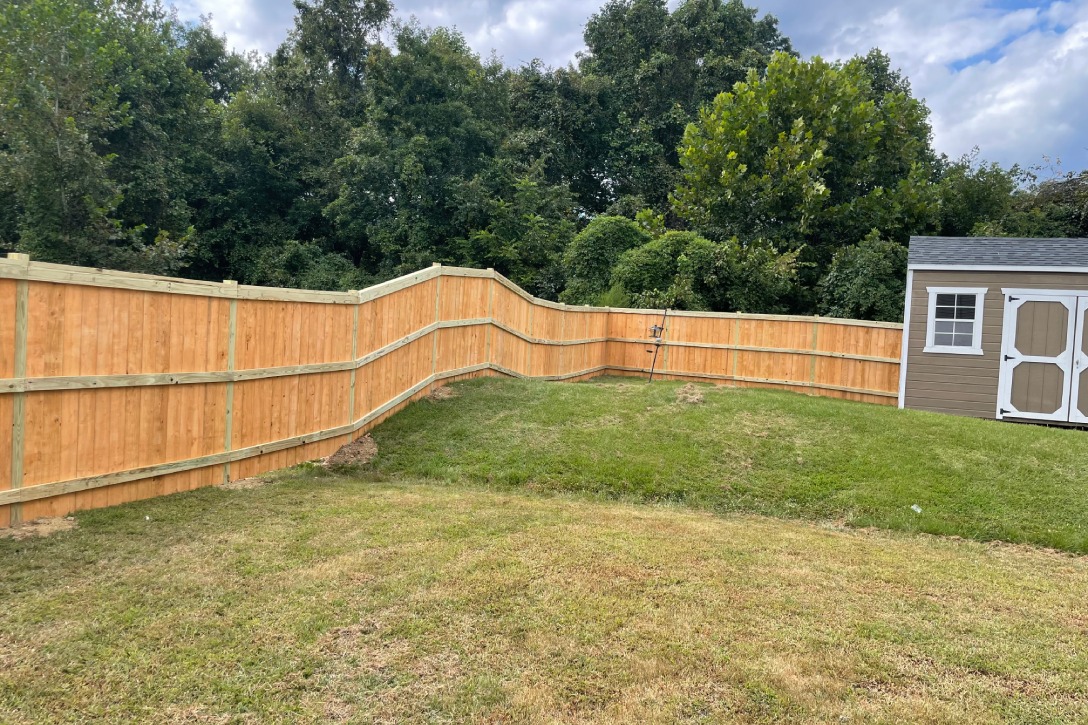
Height stops one of the ways a predator gets in: going over the top. Coyotes are strong jumpers and capable climbers, so a short garden or decorative fence won’t keep them out.
The North Carolina Wildlife Resources Commission recommends installing a coyote-proof fence at least 6 feet tall, with an outward extension or a “coyote roller” bar at the top to stop an animal from climbing over. The state’s Coyote Management Plan sets the floor a little lower, at a minimum of 5.5 feet, but taller is usually the safer choice, especially if you have observed predator activity near your property.
The top of the fence matters as much as the height. A coyote that can get a grip will climb a plain fence, so the state calls for an outward-angled extension or a roller bar along the top. Ohio State University Extension notes the same fix, describing a bar across the top that keeps a climbing predator from getting over. That top treatment is the difference between a 6-foot fence that works and a 6-foot fence a determined coyote can find a way to climb.
You may also like: Best Deer-Proof Fences for NC Gardens
Stopping Predators from Digging Underneath
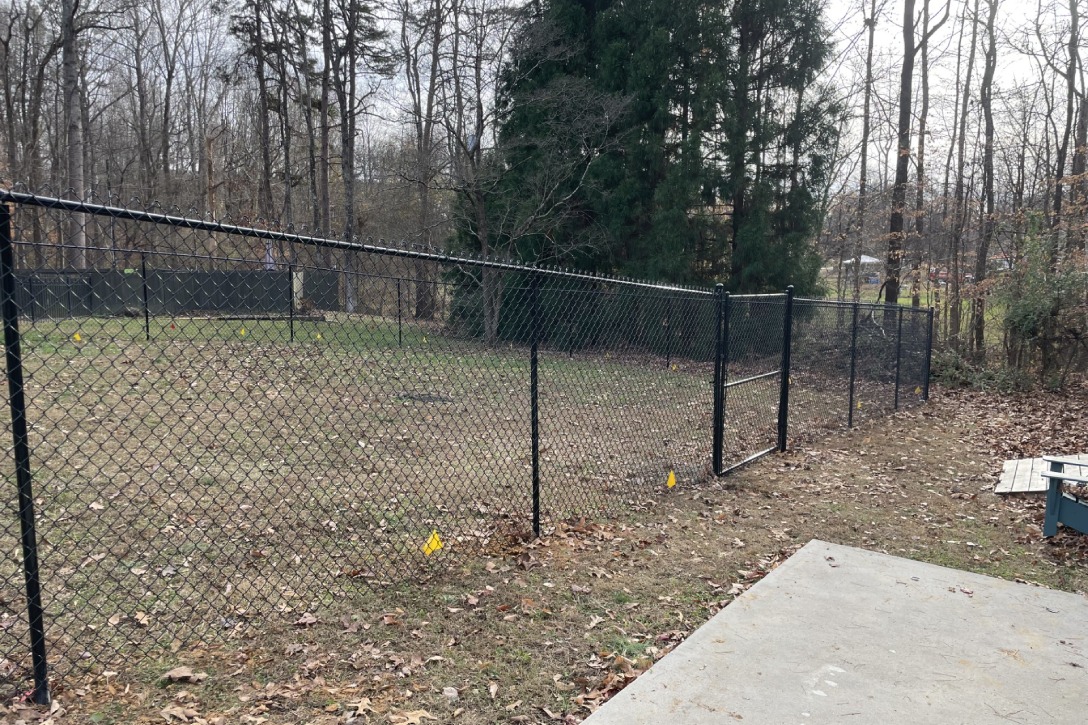
If a predator can’t go over, it will try to go under. Digging is a common point of failure for a farm or yard fence, because most fences stop at ground level and leave the soft dirt at the base wide open.
The state recommends that a predator fence provide a full barrier along the ground that prevents animals from digging under. The Coyote Management Plan spells out how, calling for either 2 feet of buried fence or an apron laid on the ground to block digging. Maine’s Department of Inland Fisheries and Wildlife puts specific numbers on both methods: bury the fence at least 8 inches below the surface, or lay a wire apron that extends out at least 15 inches from the base.
A buried apron works by turning a predator’s own instinct against it. An animal digs straight down at the fence line, hits the horizontal wire it can’t get past, and gives up rather than backing up to start a new hole farther out. It’s an effective anti-digging tool, and it is far easier to install during the build than to retrofit later.
Here’s how the two anti-digging methods compare:
| Method | Spec | Best for |
|---|---|---|
| Buried fence | At least 8 in. below ground (up to 2 ft for heavy pressure) | Permanent installs, high predator activity |
| Wire apron / L-footer | Extends out at least 15 in., staked and covered | Rocky ground, retrofits, faster installation |
| Top extension or roller bar | Angled outward along the top | Stopping climbers from going over |
Designs and Materials That Resist Predators
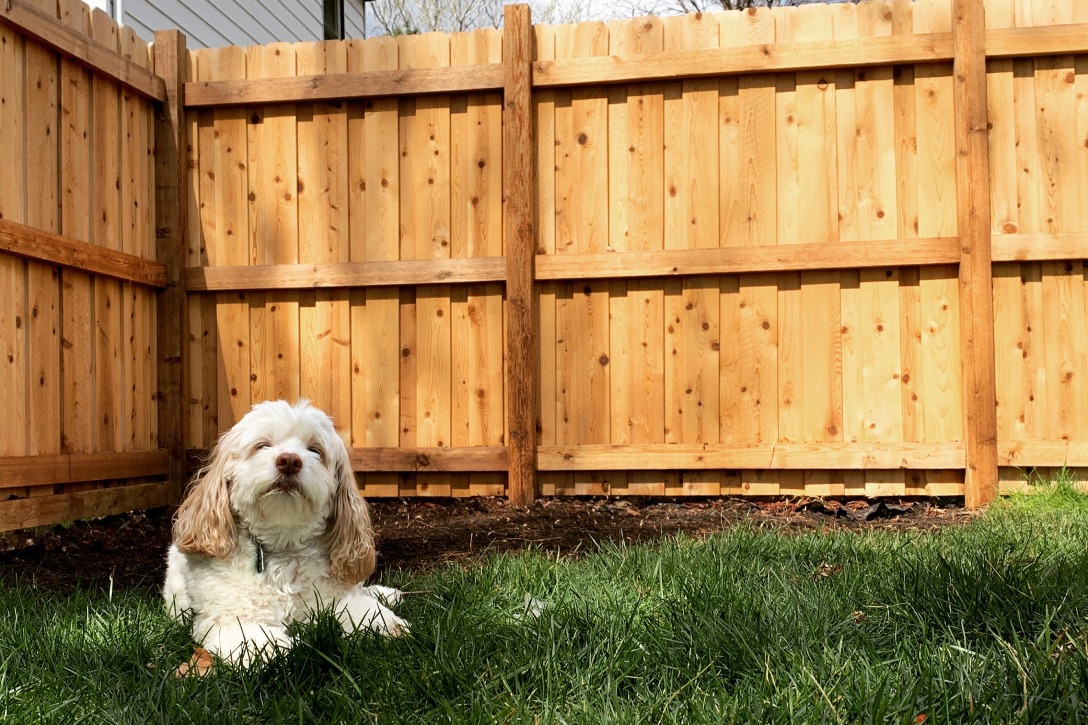
Height and a dig barrier only work if the fence itself can’t be pushed through or squeezed under. This is where material and mesh size earn their keep.
For net-wire or woven-wire fencing, Ohio State University Extension recommends keeping the mesh tight: horizontal spacing less than 6 inches and vertical spacing less than 4 inches. Wider gaps let smaller predators like foxes and raccoons slip through, and they give a coyote something to grip and climb. For small livestock and poultry, a tight-mesh material closes off the squeeze-through routes that a standard field fence leaves open.
Here are a few material and design points to consider:
- Woven or welded wire gives you a strong, long-lasting barrier that resists tearing and holds its shape under pressure.
- Chain link is durable and secure, and it pairs well with a roller bar on top and an apron at the base to close its two weak points: climbing and digging.
- Tight mesh at the bottom. Adding a lower band of small-opening hardware cloth blocks foxes, raccoons, and other small predators that would otherwise push through or under.
- Electric fencing is another tool the NC Wildlife Resources Commission points to, particularly for securing livestock. A charged wire teaches a predator to keep its distance and can reinforce a physical fence.
The gate deserves the same attention as the fence. A tall, well-built fence with a gap under the gate is the same as an open door, so the gate should sit tight to the ground and close securely every time.
The reality is that no single fence stops every predator forever. Wildlife agencies recommend pairing a well-built fence with good habitat management, removing outdoor pet food, securing garbage, and cutting back the brushy cover predators use to approach. Those habits can discourage predators from testing your fence in the first place.
Build a Predator-Resistant Fence That Works
A fence that protects pets and livestock has to be tall enough to stop a jump at 6 feet with an outward top extension, sealed at the base with a buried section or a wire apron, and built from tight-mesh material a predator can’t push through or climb. Get those right, and you have a barrier that does its job in the field for years.
Keeping your animals safe shouldn’t be a guessing game. If predators are a concern on your property, Fence Works can help you plan and build a fence suited to your land, your animals, and your local predator pressure, done right from first measurement to final walkthrough. You can see the fencing solutions we build and browse finished projects in our gallery. Request a free quote whenever you’re ready.