
How to Toddler-Proof Your Existing Fence
- Keith Frost
- Apr 20
- 9 min read

Toddlers are natural explorers. One minute, they’re stacking blocks, and the next, they’re testing the limits of your backyard fence. For parents and homeowners, that curiosity can bring a mix of joy and worry.
A backyard fence should create a safe boundary where kids can play freely. But if the fence installation leaves gaps, weak gates, climbable rails, or worn materials, it may not provide the protection you expect.
The good news: most existing fences can be improved with practical updates. By inspecting your fence carefully and making a few smart adjustments, you can turn your yard into a safer space for toddlers to play.
This guide walks through the key steps to toddler-proof your backyard fence without replacing the entire structure.
Signs You Need to Toddler-Proof Your Backyard Fence
A fence can look fine at first glance and still have small issues that make it less secure for young children. Toddlers test boundaries constantly by pushing, climbing, and exploring every corner of the yard. A quick check for a few common warning signs can help you spot problems before they turn into safety risks.
The Fence Feels Loose or Unstable: A well-built fence should feel solid when you push against it. If sections wobble, lean, or shift easily, the posts or fasteners may have loosened over time. Weather, soil movement, or aging materials can all weaken a fence structure.
Gaps Between Boards or Panels are Growing: Small openings between boards can widen as materials expand, shrink, or settle. Toddlers are naturally curious and may try to squeeze through these spaces. Openings that grow too wide can also allow a child’s arm or head to get stuck.
The Gate Does Not Close Automatically: A gate that stays open unless someone shuts it creates one of the most common escape points in a fenced yard. In busy households, it’s easy for someone to forget to close it. Self-closing hinges help ensure the gate swings shut every time, reducing the risk of a child slipping out unnoticed.
The Latch is Within a Child’s Reach: Toddlers learn quickly by watching adults. If the latch is placed too low on the gate, they may eventually figure out how to open it. Moving the latch higher or installing a child-resistant mechanism makes it much harder for young children to operate while keeping it convenient for adults.
Objects Near the Fence Make Climbing Possible: Sometimes the fence itself is secure, but nearby items make climbing easier. Outdoor chairs, toy bins, planters, or stacked firewood can act like steps that help children reach the top of the fence. Keeping a clear space along the fence line removes these climbing aids and reduces the chance of a child trying to scale the barrier.
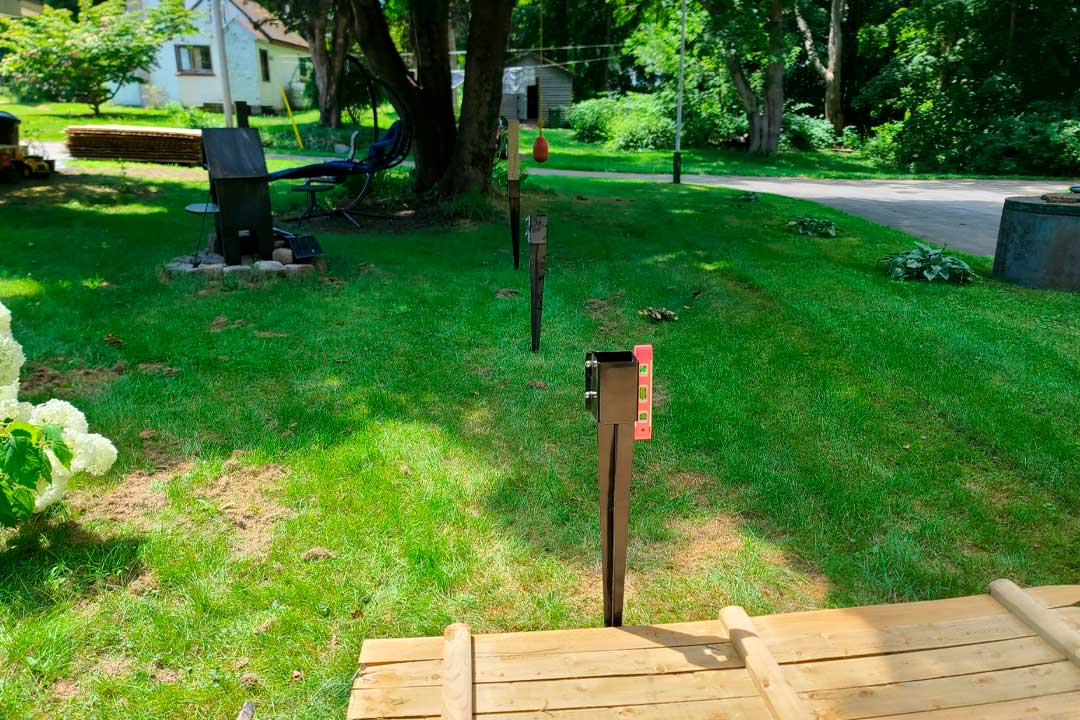
Before making any improvements, take time to walk the entire fence line and inspect it closely. What looks perfectly fine to an adult can look very different to a small child who is only a few feet tall and constantly testing boundaries.Â
1. Start by Looking at Your Fence from a Toddler’s Perspective

One of the best ways to toddler-proof your backyard fence is to physically lower your perspective. Kneel down or squat near the fence and look at it from a toddler’s eye level. From this angle, gaps, loose boards, and climbable areas become much easier to notice.
Check for Physical Damage
Weather, ground movement, and everyday wear can loosen boards or weaken connections. During your inspection, look carefully for cracked or broken panels, warped boards, and areas where fasteners have started to loosen.
You should also watch for protruding nails or screws, which can cause injuries if a child touches them. Wooden fences should be checked for splinters or rough surfaces that may need sanding.
Measure the Size of Openings
Children are surprisingly good at squeezing through small spaces. According to safety recommendations referenced by the U.S. Consumer Product Safety Commission, openings in barriers should generally be no larger than 3.5 inches to prevent children from slipping through or getting stuck.
This measurement applies not only to spaces between pickets but also to gaps beneath the fence and between panels.
2. Reinforce Gaps and Weak Areas in the Fence
Once you identify problem areas, the next step is strengthening the fence, so it forms a solid, reliable boundary.
Most gaps can be repaired without rebuilding the entire structure. The goal is to close openings and reinforce sections that feel loose or unstable.
Repair or Replace Damaged Boards
If boards are cracked, warped, or loose, replacing them is usually the simplest solution. New boards restore strength and remove the openings that curious children might try to explore.
Even a single damaged board can create a space wide enough for a toddler to push through, so repairs should be handled promptly.
Close Gaps Between Panels
Sometimes fence panels shift slightly over time, leaving small spaces between sections. These openings can be reinforced by adding additional boards, trim pieces, or mesh panels on the inside of the fence.
The goal is not only to block access but to create a fence that feels sturdy and secure when touched or pushed.
Address Gaps at the Bottom of the Fence
The space where a fence meets the ground is often overlooked. Soil erosion, settling posts, or uneven terrain can leave openings large enough for a child to crawl underneath.
These gaps can often be corrected by installing ground boards, landscape edging, or additional fencing material along the bottom of the structure.
3. Make Sure the Fence is Tall Enough to Discourage Climbing

Fence height is another important factor in backyard safety. A fence that is too short may not provide enough of a barrier as children grow more adventurous.
In many residential settings, a fence height of four feet is considered the minimum for containing young children. However, many homeowners choose five or six feet when they want additional protection.
A taller fence does not guarantee that a child will never attempt to climb it, but it significantly increases the difficulty and reduces the likelihood of successful escapes.
If your fence currently feels too short, it may be possible to extend the height by installing additional panels, post extensions, or lattice toppers designed to increase the barrier without replacing the entire fence.
4. Choose Materials That Are Safe for Children
Children tend to touch, push, and lean against fences as they play. Surfaces that are smooth, durable, and resistant to damage are generally the safest choice.
Vinyl Fencing Provides a Smooth, Low-Maintenance Surface
Vinyl fences have become increasingly popular because they offer a clean appearance and minimal maintenance requirements. The smooth surface eliminates the risk of splinters, and the material holds up well in changing weather conditions.
Because vinyl panels are typically solid or closely spaced, they also provide fewer footholds for climbing.
Aluminum and Steel Offer Strength with Minimal Upkeep
Metal fencing options, such as aluminum or steel, provide excellent durability while requiring relatively little maintenance. Properly coated metal resists rust and corrosion, which helps maintain a smooth surface over time.
These materials are also strong enough to withstand years of use without bending or breaking.
Wood Fences Require Consistent Maintenance
Wood remains a popular fencing material because of its natural appearance and affordability. However, it does require regular maintenance to remain safe for children.
Boards should be sanded if splinters develop, and damaged sections should be replaced promptly. Cedar is often considered one of the better wood options because it naturally resists rot and insects. Check our preferred materials here.
5. Pay Special Attention to the Gate
Even a tall, well-built fence can fail if the gate is not properly secured. For many toddlers, the gate becomes the easiest exit point. A reliable gate should close automatically, latch securely, and remain out of reach of small children.
Install Self-Closing Hinges
Self-closing hinges are designed to pull the gate shut after it has been opened. This feature is particularly helpful for busy households where someone might accidentally leave the gate open. With a self-closing system, the gate returns to its closed position every time.
Use a Self-Latching Gate Mechanism
A self-latching mechanism ensures that the gate locks automatically once it closes. This eliminates the need for someone to remember to manually secure the latch each time. When combined with self-closing hinges, it creates a dependable safety system.
Place the Latch Out of Reach of Children
The location of the latch is just as important as the mechanism itself. Placing the latch high on the gate makes it much harder for toddlers to reach or manipulate. Many homeowners install latches at adult chest height to keep them safely out of reach.
6. Remove Climbing Opportunities Near the Fence

Children are remarkably creative when it comes to climbing. Even the best fence design can be compromised if nearby objects provide an easy boost.
Furniture, toys, and landscaping features placed close to the fence can unintentionally act as stepstools.
Chairs, outdoor tables, toy storage bins, planters, and stacks of firewood are all common examples of items that should be kept several feet away from the fence line.
Clearing the immediate area around the fence reduces the chance that a child will find an easy path over the barrier.
Fence design also plays a role here. Structures with horizontal rails or decorative cutouts often create natural footholds. Vertical boards or solid panels tend to discourage climbing because they provide very little grip.
7. Use Landscaping to Create a Protective Buffer
By creating a small buffer zone along the fence line, you can make it less appealing for children to play directly against the structure. Dense shrubs, raised planting beds, or mulch borders can help guide play areas away from the fence while improving the appearance of the yard.
This approach works particularly well for families who want to balance safety with a thoughtful backyard design.
8. Give Extra Attention to Pools and Driveways
Some areas of the yard require additional precautions because they pose greater risks. Two of the most important areas to address are pools and driveways.
Pool Areas Require Dedicated Safety Barriers
Water safety is a serious concern for families with young children. According to the Centers for Disease Control and Prevention, drowning remains one of the leading causes of accidental death for children between the ages of one and four.
For this reason, pools should always be surrounded by a secure barrier that prevents unsupervised access. Pool gates should close automatically, latch securely, and remain locked whenever the pool is not in use.
Driveways Create Direct Access to the Street
Driveways can also become escape routes for toddlers who wander out of the yard. Installing a gate where the driveway meets the yard helps ensure that children cannot reach the street without adult supervision.
9. Regular Inspections Keep Your Fence Safe
Toddler-proofing your fence is not a one-time task. Fences are exposed to weather, soil movement, and everyday activity, which means they gradually change over time. A simple inspection once a month can help you catch small problems before they become serious safety issues.
During each check, walk the fence line and look for new gaps, loose boards, or hardware that needs tightening. Test the gate to make sure it still closes properly and that the latch engages every time.
Toddler Fence Safety Reference Table
Fence Feature | Why It Matters | Practical Improvement |
Fence height | Taller fences discourage climbing attempts | Aim for 4–6 feet when possible |
Gap spacing | Prevents children from squeezing through | Keep openings under 3.5 inches |
Gate hardware | Gates are the most common escape point | Install self-closing, self-latching gates |
Fence materials | Smooth surfaces prevent injuries | Use vinyl, metal, or well-maintained wood |
Fence perimeter | Objects near the fence can act as ladders | Move furniture and toys away |
Routine maintenance | Wear and weather create new hazards | Inspect and repair regularly |
When It’s Time to Consider Professional Fence Improvements
Sometimes repairs alone are not enough to bring an older fence up to modern safety standards. Posts may be improperly set, panels may have shifted, or the structure may simply be reaching the end of its lifespan.
When that happens, working with experienced fence professionals can make the process much easier. A properly installed fence should have posts set at the correct depth, panels measured and aligned carefully, and gates built to operate reliably year after year.
Toddler-Proof Your Backyard Fence with Fence Works
If your existing fence needs reinforcement, upgrades, or a full replacement, the team at Fence Works is ready to help.
We focus on doing fence installation right the first time. Posts are set and allowed to cure properly before the fence is built, ensuring a solid foundation that stands up to weather and everyday use. Every project follows a measured layout and a professional installation process that prioritizes durability and long-term value.
Homeowners also appreciate the straightforward experience we provide. Estimates are quick, communication is clear, and our crew leaves job sites clean and ready to enjoy. You can also check out our Design and Estimate tool. Check some of our works here.
If you’re thinking about improving your fence so your backyard is safer for your family, Fence Works can help you plan a solution that’s sturdy, reliable, and built to last. Contact us today to learn more.


Comments